Our advisors and team members engaged in in-depth discussions on strategies for scaling interventions to public policy, offering lessons from related experiences and key recommendations.
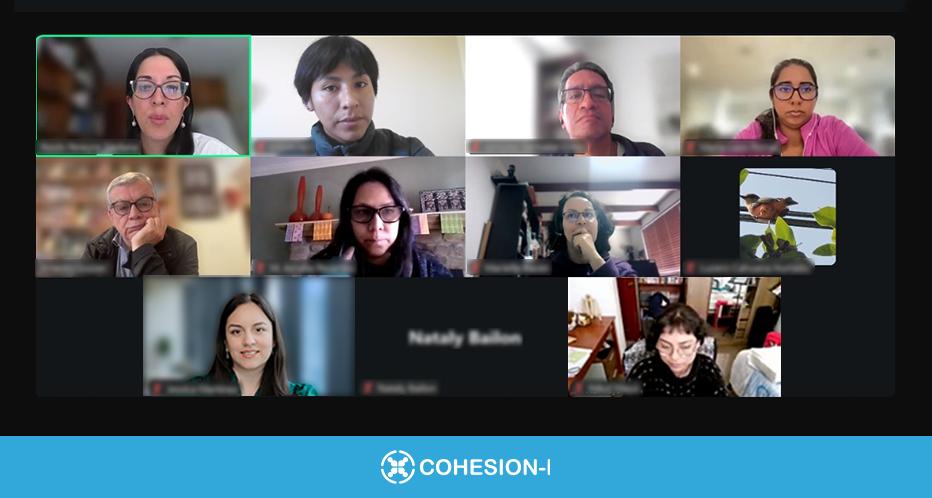
Team members from Peru held the fourth National Advisory Board meeting on November 20 to discuss scaling strategies and set strategic directions for policy transition.
The virtual session comprised a presentation and an open discussion, focusing on potential strategies for transitioning a project into public policy. The meeting began with an overview of the project’s purpose and its potential for scaling the intervention package and co-design approach to public policy implementation. The presentation then covered the current situation of NCDs in Peru, the project stages, the Theory of Change, the co-design steps, and a description of the intervention package.
For the next segment of the meeting, information was presented on the current availability of services for NCDs across both the public and private sectors, detailing communication campaigns supported by key public institutions. Further topics included existing programs and strategies, such as the Budgetary Program 0018 for NCDs (PPR 0018), the Hearts Initiative, and the National Health Strategy for NCDs. This also covered continuing education initiatives offered by the National School of Public Health and the Professional Associations of Peru.
Centered on PPR 0018, our team explored the program’s strategic design for NCDs, examining budget allocation, regional execution, and key indicators for diabetes, hypertension, and overweight and obesity. Discussions highlighted expenditure trends and prevalence patterns since 2012. Building on this, the session provided an analysis of public policy alternatives, identifying two key options: modifying PPR 0018 and implementing incentive mechanisms, while also outlining strategies and steps for policy advocacy.
Board members shared their reflections on co-design processes, noting the project’s potential to address gaps in existing frameworks by offering a Global South perspective on implementation strategies. Emphasis was placed on highlighting the co-design methodology within a specific context, particularly the “how,” which is often overlooked in publications. Suggestions addressed policy transition needs, stressing the importance of clearly defining which interventions should be scaled and which existing services require modification. A phased approach was recommended, beginning at the local level while exploring pathways for broader national implementation, alongside considerations of policy development processes, timelines, and institutional coordination challenges. Our advisors also shared related experiences from prior interventions, offering insights on scalability and adaptation.
Our team members addressed these comments, providing further detail on the intervention package intended to be scaled to public policy, and agreed on local mechanisms as a viable starting point for policy transition. We extended our gratitude to board members for their engagement and look forward to reconvening in 2026 to review progress.