Through participatory workshops across four intervention sites, our team in Nepal refined communication materials and gathered community input to inform health center improvements.
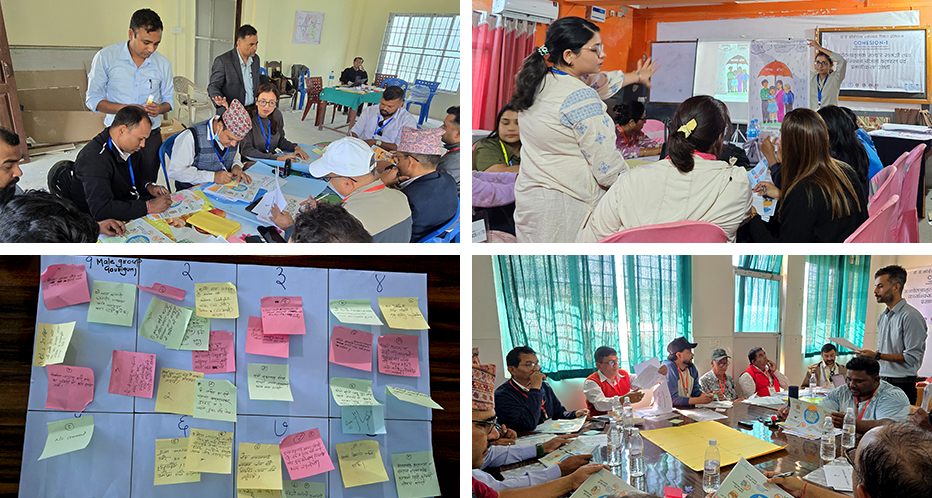
Our team in Nepal conducted discussion and validation workshops across four intervention sites on November 20, 21, and 25 to ensure the health messages resonate with the intended community. Throughout the sessions, 16 communication materials, such as loudspeaker jingles, pamphlets, leaflets and mural designs, were presented to healthcare providers, Female Community Health Volunteers (FCHVs), people living with NCDs and NTDs, caregivers, community leaders, teachers, and social workers. Building on their experience, participants’ inputs were used to refine and enhance the materials. Feedback was gathered to adapt the communication materials to local realities, including dietary practices and local food production.
During these collaborative workshops, participants expressed their commitment to support the project intervention, including integrating health messages into schools, utilizing public spaces for community engagement, implementing capacity building for teachers on NCD prevention, and expressing FCHVs’ readiness to disseminate information throughout the community.
Beyond communication materials validation, the workshops also gathered community input on ways to enhance local health centers. Participants identified feasible infrastructure improvements, such as installing token dispensers, water filtration systems, and fans in waiting areas, aimed at improving patient satisfaction.
Across these sessions, community perspectives supported not only the co-design of materials, but also strengthened local ownership and ensured that the interventions were aligned with local contexts.