Eight half-day activities brought together 264 participants from ten communities to celebrate their involvement in the project, share key research findings, and strengthen health knowledge.
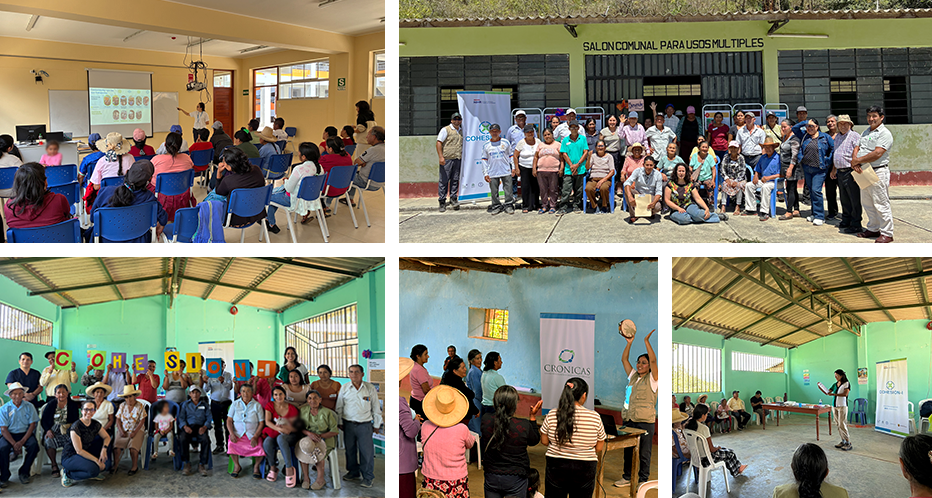
Our project team in Peru concluded its community-level activities with eight half-day closing events held between September 14 and 27. The events brought together 264 participants from the ten communities involved in the project, including six intervention communities and four control communities.
To support participation in the events, our team carried out coordination and community engagement and involvement (CEI) activities. These efforts ranged from providing community authorities with letters requesting their permission and support to working with community leaders to disseminate information about the events and, in some cases, facilitate the use of community spaces. In the days leading up to each event, our team also visited households across the ten communities to invite community members to participate personally.
Designed as a space to recognize participants’ contributions and reflect on the experiences shared throughout the project, each event was structured around three components. The first focused on sharing the project’s activities, key findings and recommendations to help strengthen community health care, while acknowledging participants’ contributions to the research.
The second component was an exhibition of pictures taken by some research participants of the qualitative evaluation, featuring what it means for them to live with a chronic condition and what is valuable to them (e.g., families, community).
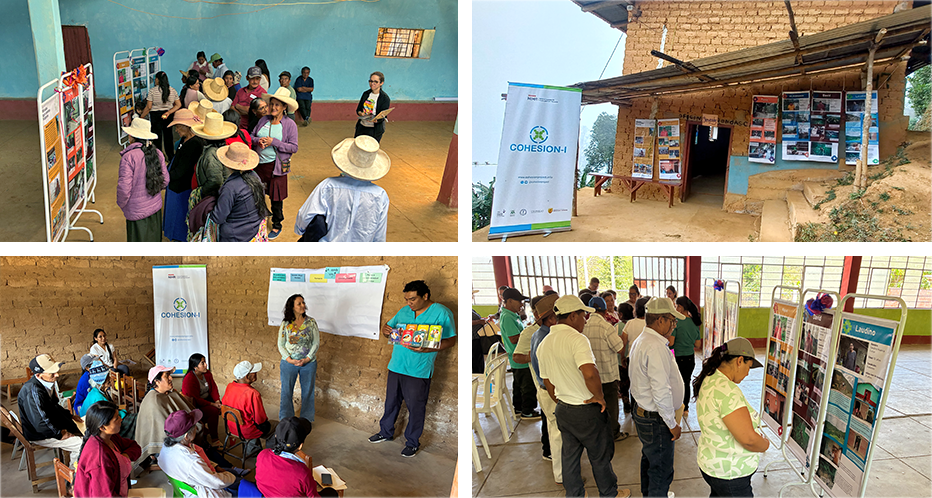
The final component was a health education training led by physicians on topics identified as particularly important in the qualitative evaluation, covering the services offered by the different levels of care in the health system, with an emphasis on services available at local health posts; the importance of following treatment and adhering to healthy behaviors; and medicines versus vitamins.
Additionally, our team met with local municipalities and micro-level health networks to explain the work carried out in the project. These local stakeholders also received reports summarizing the preliminary results of the evaluations.
Across all of these events, the shared purpose was to thank participants for their contributions, share the project’s learning with the communities, celebrate their contributions, and create a space for connection, reflection, and learning. We extend our gratitude to the community leaders, local authorities, primary health care workers and participants who made these gatherings possible.